



 English
Trade Promotion in the Digital Era: When Data Becomes the Foundation of Business Connectivity
For decades, trade fairs, exhibitions, and direct business networking programs have played an important role in trade promotion activities. These events allow businesses to meet potential partners, introduce their products, and expand into new markets.
However, alongside the rapid growth of e-commerce and the digital economy, the way businesses search for and evaluate partners is also changing significantly. Increasingly, international buyers proactively research company information, products, and production capabilities online before moving on to deeper discussions.
According to McKinsey’s B2B Pulse Survey, researching and evaluating suppliers in digital environments has become a critical part of the B2B decision-making journey. This suggests that transparent data and information are playing an increasingly important supporting role in trade activities.
In this context, an important question emerges: how can trade promotion activities better leverage the data generated from business networking and trade programs?
Trade Promotion Data – An Underutilized Resource
In practice, every trade promotion program generates a considerable amount of information about participating businesses, showcased products, and potential partners.
However, most of this data is still stored in the form of contact lists, spreadsheets, or post-event summary reports. When data is stored separately for each program, tracking partnership opportunities or analyzing long-term market trends becomes significantly more difficult.
In data management, this phenomenon is commonly referred to as data silos—a situation where information is stored in isolated systems that are difficult to integrate. According to IBM, data silos can make it challenging for organizations to leverage data effectively to support decision-making.
This does not mean that traditional promotion models are ineffective. In fact, many trade fairs and business matching programs continue to play an essential role in creating relationships and partnership opportunities.
However, as commerce becomes increasingly digitalized, many experts believe that data can serve as an additional infrastructure layer, enabling trade promotion activities to be tracked and analyzed more effectively.
Three Data Bottlenecks in Trade Promotion
Lack of Standardized Business Data
In many trade promotion programs, company profiles are presented in widely varying formats. Some businesses provide detailed information about production capabilities, product portfolios, and quality certifications, while others only present general introductions.
When data is not structured in a consistent format, buyers face difficulties comparing and evaluating suppliers within the same industry.
According to ClickInsights, B2B customers typically complete a large portion of their supplier research and evaluation before initiating direct contact, highlighting the growing importance of clear and structured information.
Difficulty Tracking Genuine Market Interest
In traditional promotion programs, effectiveness is often measured using metrics such as the number of booth visitors or the number of meetings organized.
However, these indicators do not fully reflect the actual level of buyer interest. Actions such as downloading technical documents, requesting quotations, or initiating deeper discussions often signal a higher likelihood of forming real business opportunities.
In digital environments, capturing and analyzing these signals can help promotion organizations better understand market demand.
Data That Cannot Accumulate Over Time
Another characteristic of traditional promotion programs is that data is usually stored separately for each event. After each trade fair or networking program, reports are archived independently and are rarely integrated into a unified system.
This makes it more difficult to analyze market trends, track buyer journeys, or evaluate trade promotion effectiveness over the long term.
The Rise of Data-Driven Trade Connectivity
In response to changes in trading behavior, many trade promotion organizations and technology companies are experimenting with new models that combine traditional promotion activities with digital data infrastructure.
In these models, business data is standardized within a unified structure, while buyer interactions can be recorded and analyzed over time.
The goal is not to replace traditional trade promotion activities, but rather to add a data layer that makes business connections more transparent and easier to monitor.
Data as the Operational Foundation of Arobid’s Digital Trade Promotion Infrastructure
One platform implementing this approach is Arobid Version 2.0, positioned as a digital trade and investment promotion infrastructure integrating a global B2B e-commerce platform. In this model, business data and trade interaction data form the foundation of the system’s long-term operation.
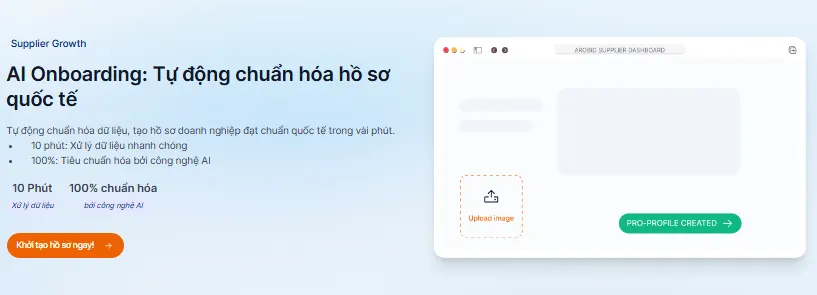
The data management cycle on the platform begins with standardizing business profiles when companies join the ecosystem. Legal information, production capabilities, product portfolios, and quality certifications are structured into a unified data format.
The AI Onboarding tool supports the digitization and standardization of business profiles from the initial stage, helping reduce inconsistencies in how companies present their information.
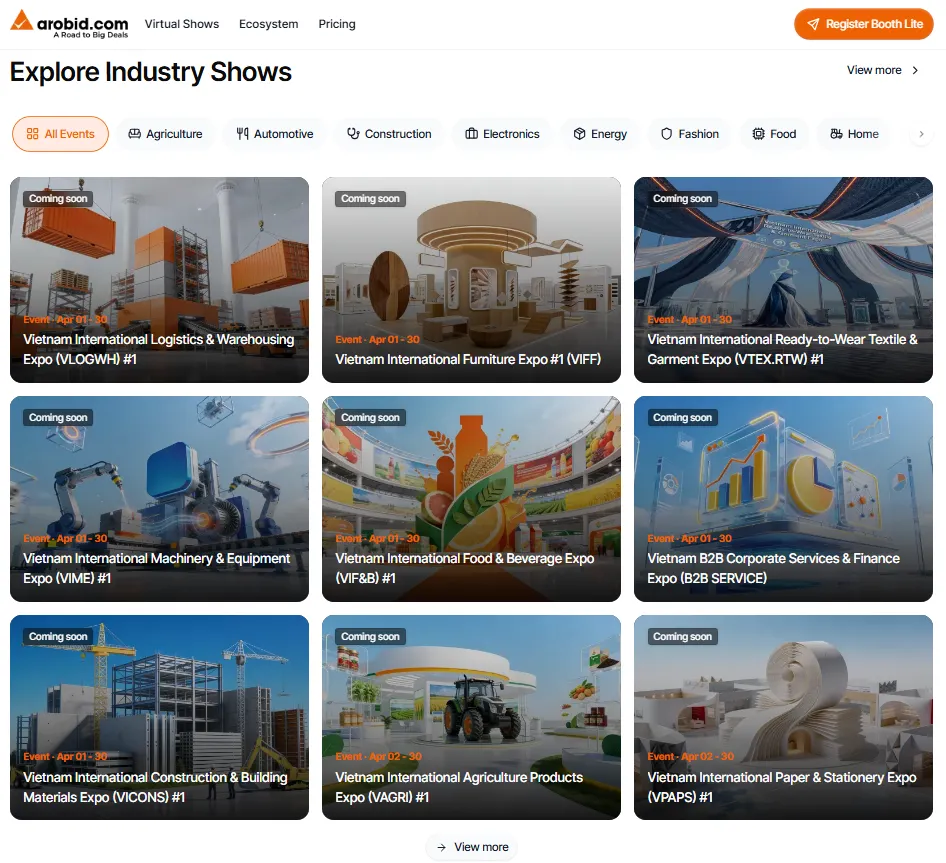
After completing their profiles, businesses can participate in online exhibitions and digital trade promotion events (TradeXpo) on the platform. Here, data related to products, industries, and company capabilities is integrated into the platform’s search and data analysis systems.
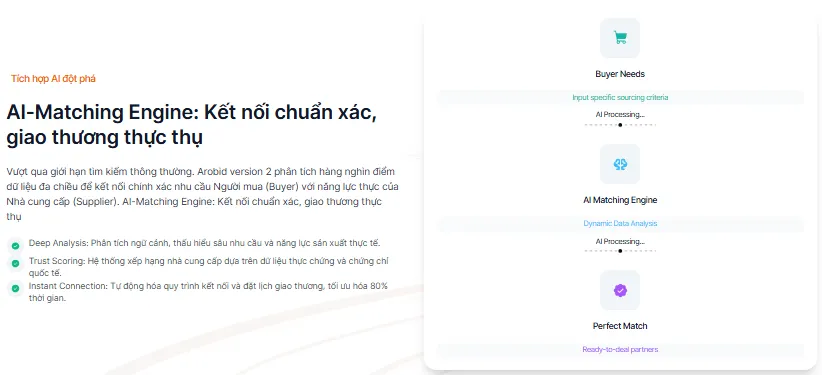
To support partner discovery, the platform develops the AI Deep Search Engine, a data search system that enables buyers to explore companies and products across multiple information layers, including industry categories, technical standards, production capacity, and export markets. This approach allows buyers to access company data from various perspectives rather than relying solely on simple keyword searches.
Additionally, the AI Buyer Find & Match mechanism is designed to analyze industry data, business profiles, and buyer interest signals in order to suggest suitable business connections. This system does not replace the decision-making process of businesses, but rather serves as a support tool that helps shorten the partner discovery process.
As businesses participate in digital exhibitions and trade promotion programs on the platform, the system also records buyer interactions such as booth visits, levels of product interest, and connection requests. These datasets continue to accumulate and are analyzed to help businesses track the market’s interest journey over time.
According to representatives of Arobid, managing data through a continuous cycle—from business profile creation, to participation in digital exhibitions, and the recording of buyer interactions—can make trade promotion activities more transparent and easier to monitor in digital environments.
>>> Learn more about Arobid Version 2.0: https://arobid.com/en
When Data Becomes the Infrastructure of Trade
The growth of the digital economy is opening new approaches to trade promotion. Alongside traditional trade fairs and direct networking programs, data is increasingly playing a supporting role in searching, evaluating, and tracking business opportunities.
In this context, structuring business data clearly, capturing signals of market interest, and accumulating trade data over time can help both promotion organizations and businesses gain deeper insights into market demand.
Rather than replacing traditional promotion activities, data platforms and digital trade infrastructures are expected to play a complementary role, helping business connectivity become more efficient and transparent in the digital economy era.
Read the full article: Measuring Trade Promotion Effectiveness in the Digital Era: Which Metrics Truly Matter? here
Technology
.png?width=1920&quality=90)





May 7, 2025