
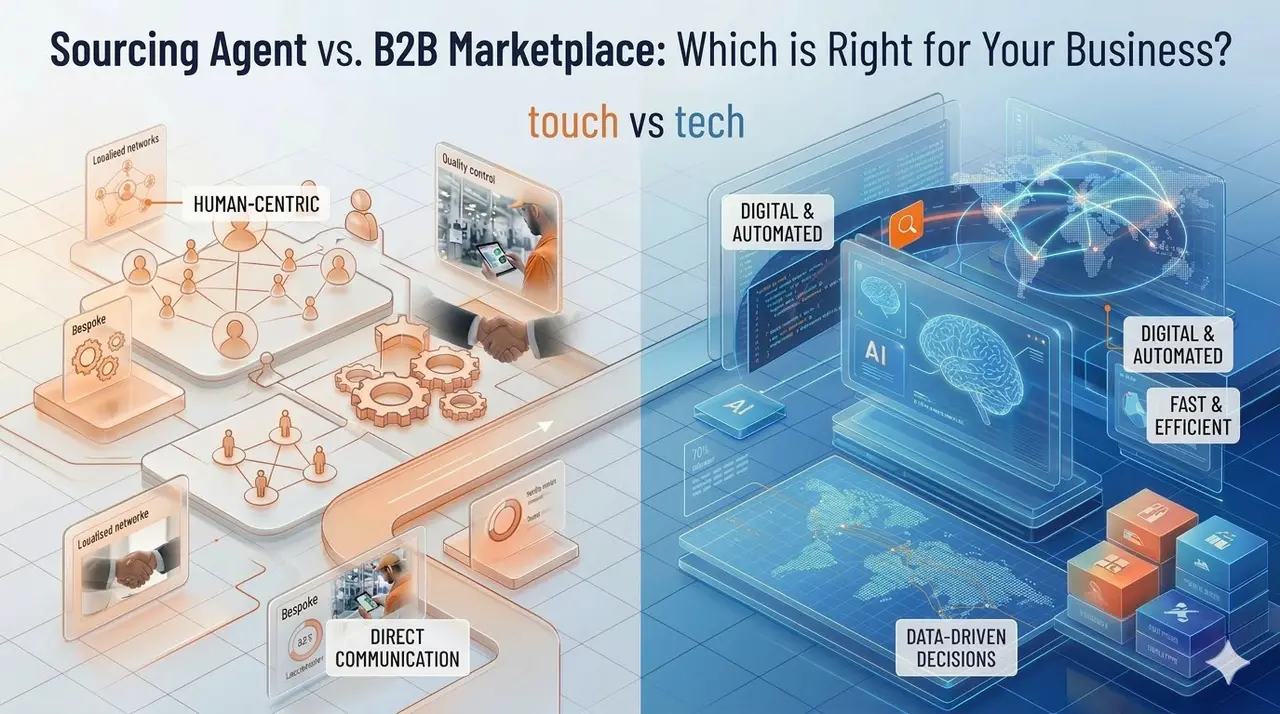
Navigating the global trade ecosystem requires a strategic choice in procurement: the Digital Route (B2B Marketplaces) or the Human-Centric Route (Sourcing Agencies). While platforms like Alibaba prioritize algorithm-driven speed and accessibility to millions of suppliers, professional intermediaries offer on-the-ground expertise, physical negotiation, and strict quality control. Which path guarantees the best ROI for your supply chain? Dive into our comprehensive guide: Sourcing Agent vs. B2B Marketplace: Which is Right for Your Business to find your optimal strategy.
According to International Trade Administration, the global B2B e-commerce market is projected to reach $36 trillion by 2026. This figure signifies a fundamental shift in value exchange, not just volume. Driven by digital transformation, companies must replace legacy methods with modern solutions.
For buyers, choosing the wrong channel results in more than just operational friction. It leads to eroded margins, quality control failures, and supply chain fragility. While marketplaces offer speed and accessibility, sourcing agents provide essential oversight for complex manufacturing.
This guide analyzes the strategic trade-offs between these two models. By examining operational mechanisms, risk profiles, and cost structures, we provide a data-driven framework to determine which approach aligns with your business maturity and production requirements.
Contents
- 1 Defining the Ecosystem: Tech vs. Touch
- 2 The 9-Step B2B Sourcing Process Lifecycle
- 3 Sourcing Channels: Models and Key Differences
- 4 Deep Dive: Navigating B2B Marketplaces
- 5 Deep Dive: The Strategic Value of Sourcing Agents
- 6 Risk Management and Best Practices
- 7 Making the Strategic Choice: Control vs. Convenience
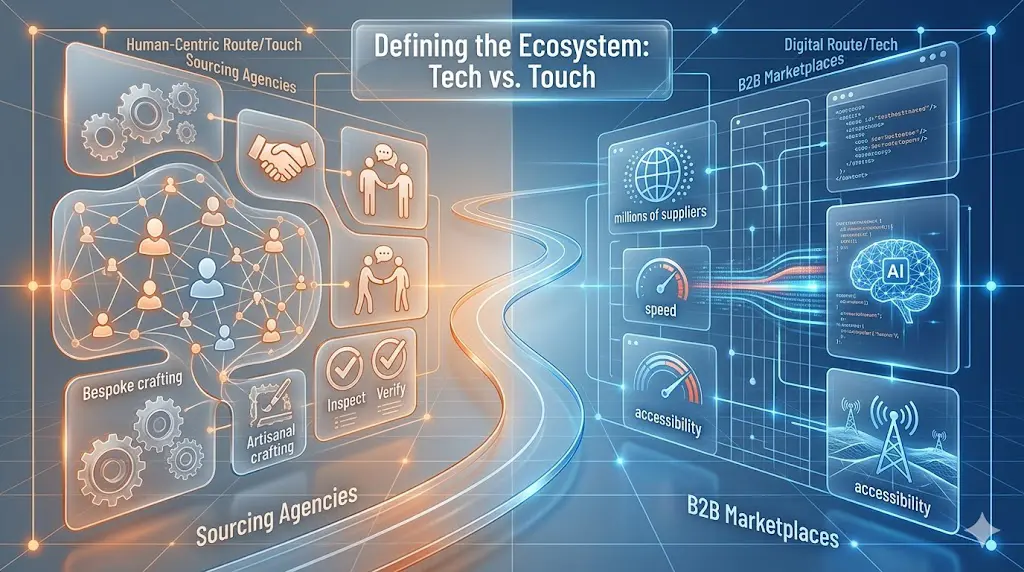
Defining the Ecosystem: Tech vs. Touch
Understanding the digital trade ecosystem requires distinguishing its core components:
- The Digital Route (B2B Marketplaces): Platforms like Alibaba, Arobid, or Amazon Business function as centralized hubs. They leverage algorithms and data to connect buyers directly with millions of suppliers, prioritizing speed and accessibility.
- The Human-Centric Route (Sourcing Agencies): Professional intermediaries who act as on-the-ground representatives. They rely on established networks, expertise, and physical negotiation to secure deals, prioritizing customization and quality control.
The 9-Step B2B Sourcing Process Lifecycle
While the CIPS Procurement & Supply Cycle outlines a comprehensive 13-stage framework covering the entire product lifespan, effective B2B Sourcing specifically focuses on the strategic acquisition phases. Organizations often streamline this into a 9-step lifecycle to prioritize efficiency and agility.
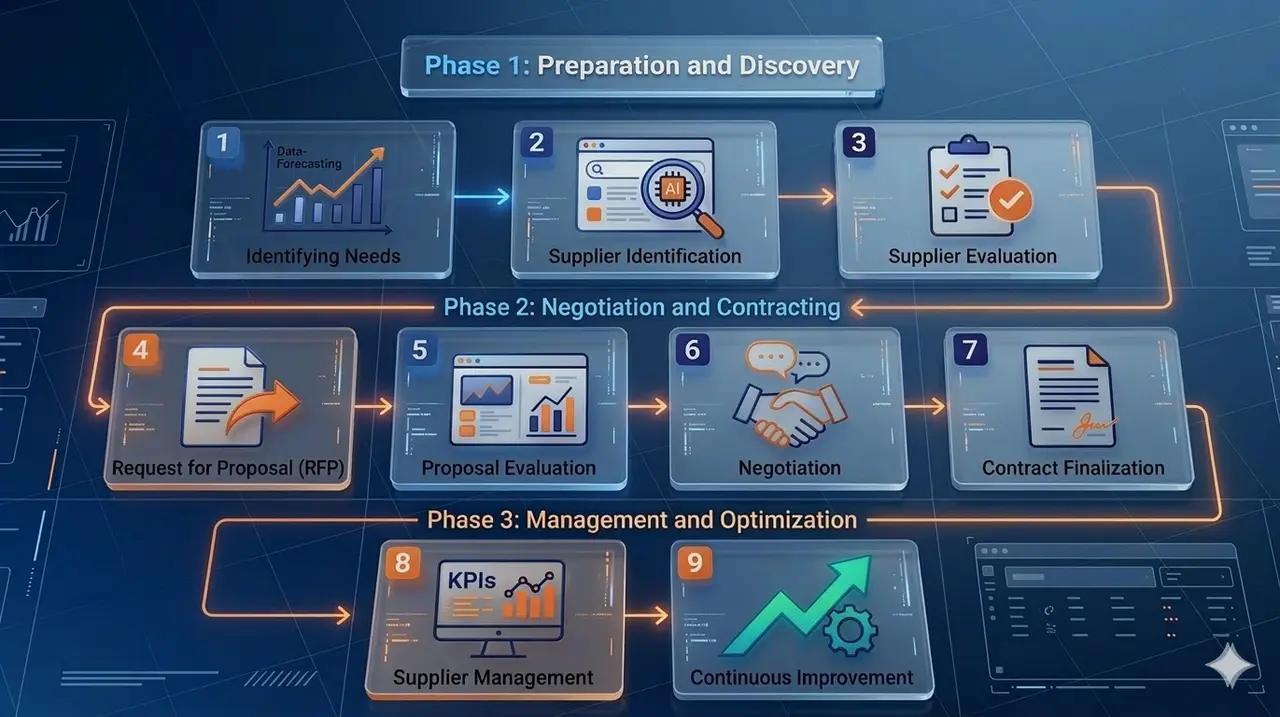
Phase 1: Preparation and Discovery
Preparation ensures market entry efficiency.
- Identifying Needs: Define precise requirements for goods or services. Companies use demand forecasting tools (e.g., SAP Integrated Business Planning) to align sourcing volume with business projections.
- Supplier Identification: Research potential suppliers via B2B platforms or trade shows. AI-driven tools like ThomasNet’s Supplier Discovery filter vetted suppliers efficiently.
- Supplier Evaluation: Assess candidates based on quality, reliability, pricing, and sustainability. A weighted scoring model objectively prioritizes criteria and removes selection bias.
Phase 2: Negotiation and Contracting
Buyers focus on securing value and ensuring compliance.
- Request for Proposal (RFP): Issue RFPs detailing specifications. Standardized templates from procurement software ensure all vendors bid on identical requirements.
- Proposal Evaluation: Compare proposals based on cost, quality, and timelines. Analytics dashboards (Tableau, Power BI) enable data-driven decisions over intuition.
- Negotiation: Finalize pricing, MOQs, and delivery schedules. Understanding cultural nuances builds trust for favorable long-term terms.
- Contract Finalization: Draft and sign agreements. Use smart contract technology or platforms like GSBN (Global Shipping Business Network) to ensure transparency.
Phase 3: Management and Optimization
Post-contract management focuses on performance and improvement.
- Supplier Management: Monitor performance using KPIs like on-time delivery and quality. CRM tools (Zoho, SAP SRM) facilitate quarterly reviews and proactive issue resolution.
- Continuous Improvement: Optimize processes through feedback. Sustainability certifications (EcoVadis, ISO 14001) align supply chains with ethical standards and reduce reputational risk.
Sourcing Channels: Models and Key Differences
Choosing between a Marketplace and an Agent is a strategic trade-off between control versus convenience and automation versus personalization. The following table outlines the strategic trade-offs between the two primary sourcing models.
| Feature | B2B Marketplace (Direct Sourcing) | Sourcing Agent (Full-Service) |
| Primary Model | Self-Service (DIY): Buyer connects directly with suppliers via a digital platform. | Service-Based: Buyer hires a professional intermediary to manage procurement. |
| Cost Structure | Lower Upfront Cost: No service fees. Costs are limited to product price + shipping. | Higher Upfront Cost: Includes product cost + commission (typically 3-10%) or fixed retainer. |
| Supplier Transparency | Low to Medium: Verification relies on platform badges. Risk of mistaking Trading Companies for Manufacturers. | High: Agents typically vet factories in person and disclose the manufacturer’s identity to the buyer. |
| Quality Control (QC) | Remote/Limited: Relies on third-party inspection services or sample shipping. High risk of defect slips. | On-Site/Rigorous: Agents perform on-site inspections during production and pre-shipment. |
| Product Suitability | Standard Goods: Best for off-the-shelf products, commodities, and low-complexity items. | Custom Goods (OEM/ODM): Essential for private labeling, complex engineering, or unique designs. |
| Communication | Fragmented: Often involves language barriers and time zone delays via chat interfaces. | Streamlined: Agents act as a cultural bridge, handling translation and negotiation in real-time. |
| MOQ (Min. Order Quantity) | Flexible: Platforms often cater to smaller orders (Low MOQs). | Higher: Agents usually require higher volume to justify their service fees. |
| Key Risk | Product Quality & scams: Higher chance of receiving goods that do not match digital listings. | Agency Conflict: Risk of agent receiving kickbacks from factories (if not vetting the agent properly). |
| Best For | Startups, Dropshippers, and buyers prioritizing speed and low cost. | Established brands and enterprises prioritizing quality assurance and supply chain security. |
The Verdict: Use Marketplaces for speed and standard product validation. Switch to Sourcing Agents when scaling production or requiring strict customization where a 1% defect rate affects brand reputation.
For buyers opting for the self-service route, selecting the right platform type is crucial. Marketplaces differ by scope and specialization.
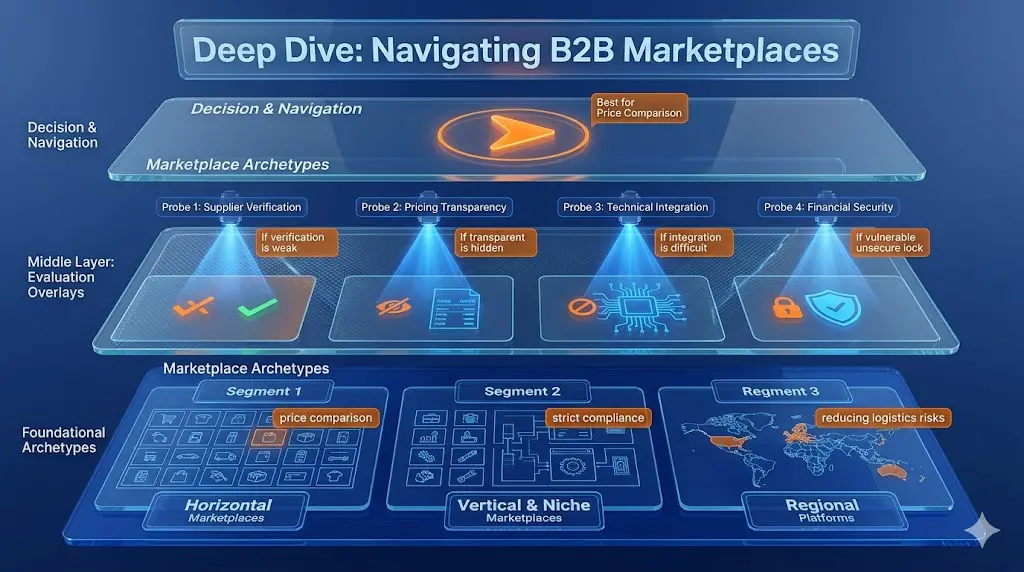
For buyers opting for the self-service route, selecting the right platform type is crucial. The table below categorizes marketplaces by scope and strategic fit.
| Archetype | Description & Funstion | Key Examples | Strategic Fit & Best Use Cases |
| Horizontal Marketplaces | “The Everything Stores”
Platforms serving multiple industries with massive product variety and competitive pricing. |
Alibaba: Global volume leader.
Amazon Business: Speed & logistics focus. |
Best for: Price comparison, commodities, and standard goods.
Note: Buyers must perform heavy due diligence (DIY vetting). |
| Vertical & Niche Marketplaces | “The Specialists”
Platforms focused on specific sectors or capabilities with deep technical specifications. |
Mouser: Electronics components.
Medline: Healthcare supplies. Xometry: Custom manufacturing. |
Best for: Specialized procurement requiring strict industry compliance, exact technical specs, or custom fabrication. |
| Regional Platforms | “The Local Networks”
Platforms focused on specific geographic regions to support nearshoring strategies. |
ThomasNet: North American industrial sourcing.
Indiamart: Indian supplier network. |
Best for: Reducing logistics risks, shortening lead times, and finding vetted local manufacturers (Nearshoring). |
Critical Evaluation Criteria for Buyers
Since marketplaces lack human oversight of an agent, buyers must rigorously vet platforms based on:
- Supplier Verification: Prioritize platforms offering third-party audits or government registration checks.
- Pricing Transparency: Ensure clear breakdowns of unit costs, shipping, and MOQs. Avoid platforms with hidden tiers.
- Technical Integration: For high-volume sourcing, check for API compatibility with ERP systems (SAP, QuickBooks).
- Financial Security: Essential requirement: Escrow services and secure payment gateways to protect funds until delivery verification.
Deep Dive: The Strategic Value of Sourcing Agents
While marketplaces provide access, sourcing agents provide visibility and control. For complex procurement in markets like China, agents mitigate systemic risks that digital platforms cannot address.
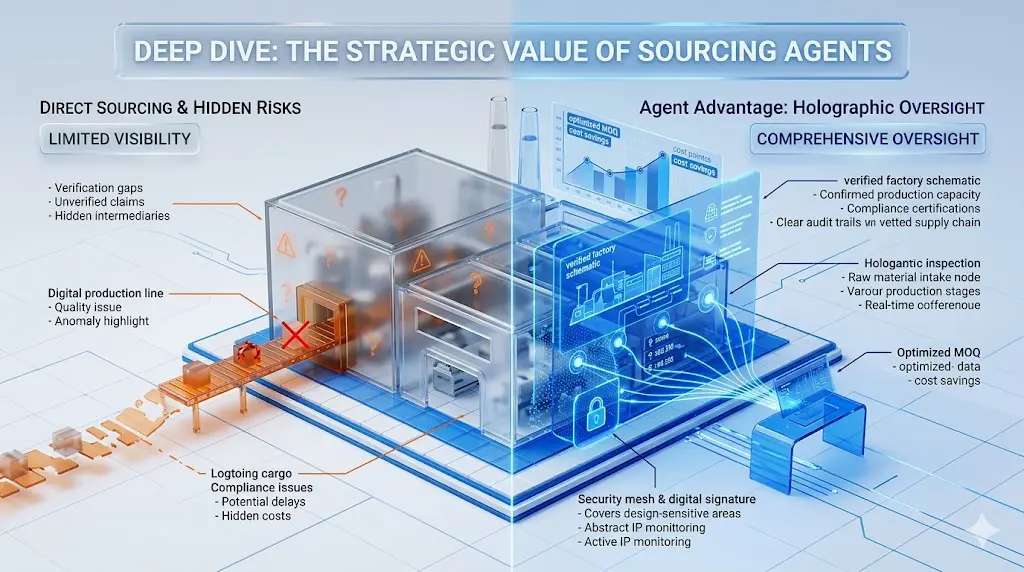
The Risks of Direct Sourcing (The “Badge” Limit)
Platform filters and “Gold Supplier” badges indicate membership status, not necessarily production capability.
- Verification Gaps: Risks include middlemen posing as factories, fake certifications, and payment fraud.
- Quality Variance: Without on-site oversight, bulk orders frequently deviate from the initial “golden sample.”
- Logistics & Compliance: Lack of expertise in Incoterms and local regulations leads to delays and unexpected landed costs.
The Agent Advantage: Operational Control
Professional agents act as a localized extension of the buyer’s operations.
- Vetted Supply Chain: Agents conduct in-person audits to verify factory legitimacy and capacity.
- On-Site Quality Control (QC): Inspections occur at raw material, production, and pre-shipment stages.
- IP Protection: Drafting enforceable NDAs and monitoring supply chains prevents design theft.
- Strategic Negotiation: Localized communication secures better MOQs and pricing than foreign buyers typically achieve directly.
Case Study: Technical Oversight in Action
The value of an agent lies in preventing failure before shipment.
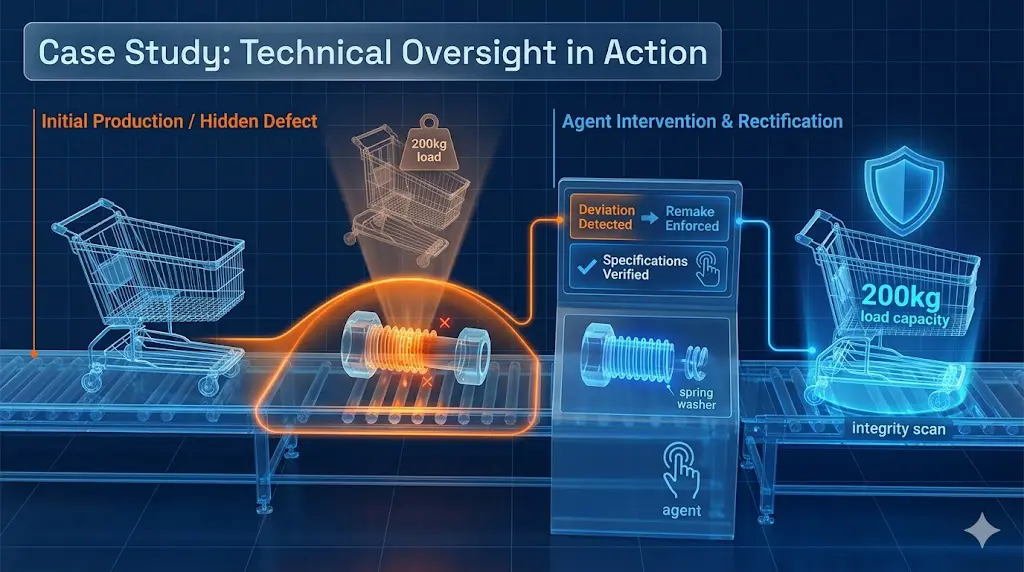
Project: An overseas supermarket chain ordered custom metal wire-frame trolleys designed for a 200kg load.
- The Hidden Defect: The initial sample matched drawings perfectly. However, during mass production, the factory engineer shortened the internal nut threads to cut costs. Under load testing, the structure collapsed.
- Agent Intervention: The sourcing team detected this deviation during mid-production testing. They enforced a remake of the internal components to exact specifications and added spring washers for stability.
- Impact: Prevented the distribution of dangerous products, saving the client from safety liability and reputational damage.
Risk Management and Best Practices
Sustainable B2B trade demands a strategy to mitigate financial, legal, and operational exposure.
Financial and Legal Safeguards
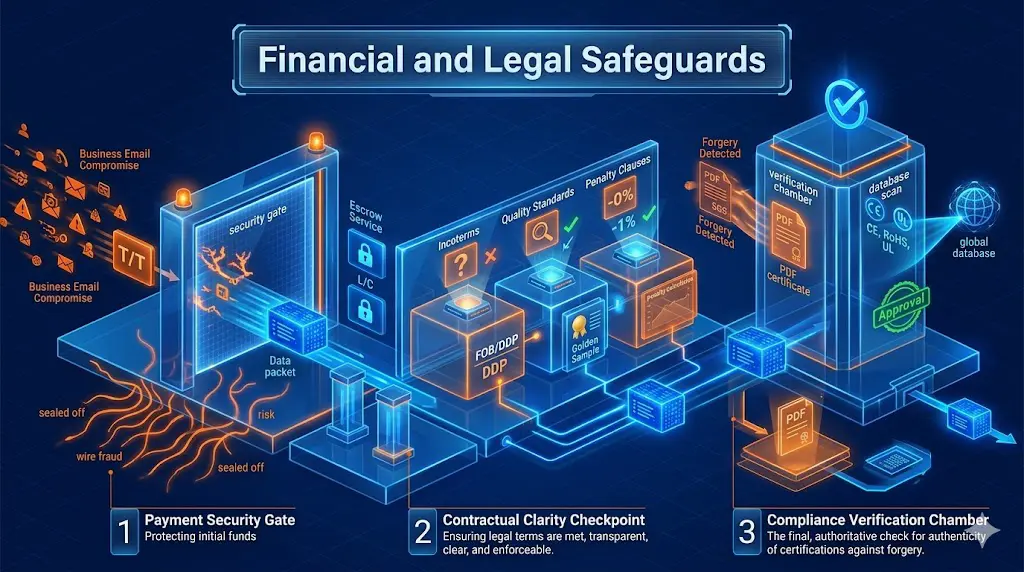
Payment Security: Avoid direct wire transfers (T/T) for initial orders, as FBI reports on Business Email Compromise highlight wire fraud as a top risk in international trade. Instead, utilize escrow services (e.g., Alibaba Trade Assurance) or Letters of Credit (L/C) for transactions exceeding $50,000.
- Contractual Clarity: Draft comprehensive agreements specifying:
- Incoterms: Define liability (e.g., FOB vs. DDP). According to ICC guidelines on Incoterms® 2020, clearly defining FOB vs. DDP is critical for liability transfer.
- Quality Standards: Attach detailed spec sheets and “Golden Sample” photos.
- Penalty Clauses: Establish clear deductions for late delivery or defect rates exceeding 1%.
- Compliance Verification: Never accept PDF certificates at face value. Leading inspection bodies like SGS recommend verifying CE, RoHS, or UL certifications directly through the issuing authority’s database to prevent forgery.
Operational Resilience
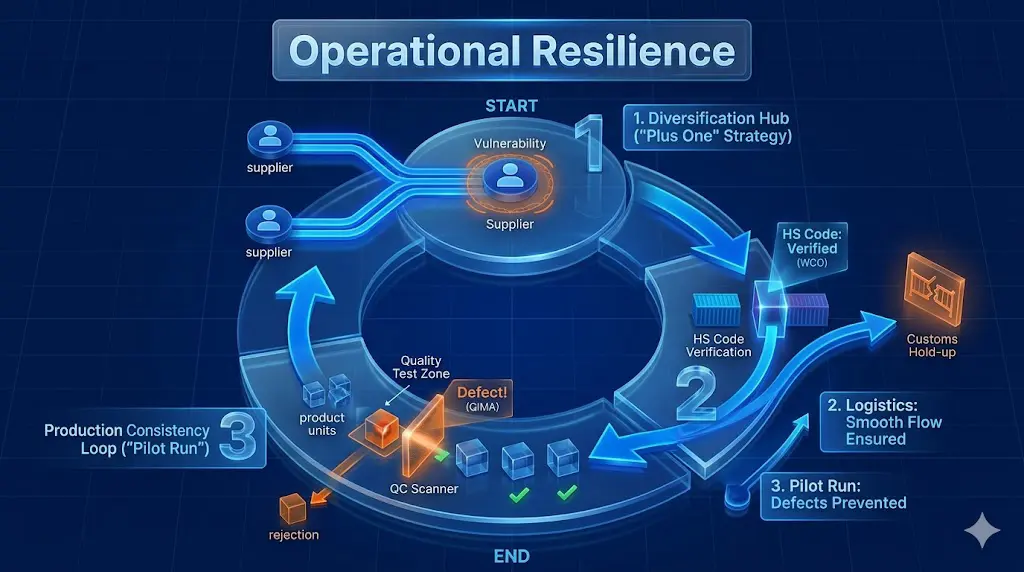
Diversification: Maintain a “Plus One” strategy – always have a backup supplier validated to prevent disruption from single-source failure. Research from McKinsey & Company emphasizes that multi-sourcing is critical to building supply chain resilience against regional disruptions.
- Logistics Precision: Pre-classify goods with correct HS Codes using the World Customs Organization harmonized system to prevent costly customs hold-ups.
- The “Pilot Run”: Mandate a small trial order to test production consistency. Data from quality control firms like QIMA suggests that defect rates are highest in initial production runs, making this step non-negotiable.
Partner Selection Checklist (For Agents & Suppliers)
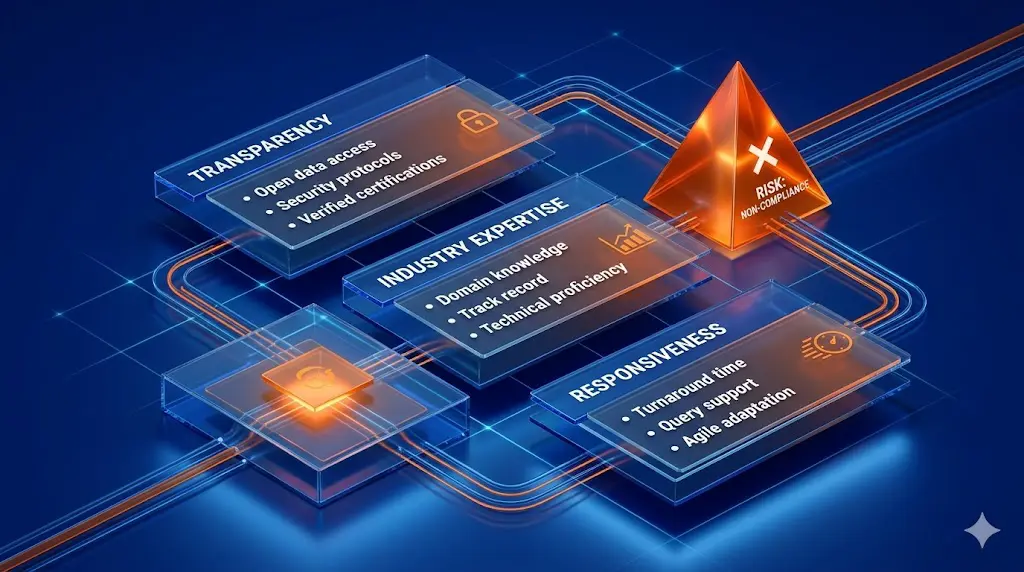
- Transparency: Must disclose factory locations and allow third-party audits.
- Industry Expertise: Proven track record in your specific niche (e.g., textiles vs. consumer electronics).
- Responsiveness: Communication speed and clarity are proxies for operational reliability.
- Red Flag: Avoid partners who refuse to sign Non-Disclosure Agreements (NDAs) or mask the manufacturing source.
Making the Strategic Choice: Control vs. Convenience
In the landscape of global trade, there is no “one-size-fits-all” solution. The decision between a Sourcing Agent and a B2B Marketplace depends entirely on your risk tolerance, product complexity, and scaling stage.
- The Verdict for Startups & Speed-to-Market: For standard, off-the-shelf goods where speed is the priority, B2B Marketplaces remain the most efficient entry point. They allow for rapid price comparison and low Minimum Order Quantities (MOQs), enabling businesses to validate market demand with minimal upfront risk.
- The Verdict for Scaling & Customization: For businesses requiring custom manufacturing (OEM/ODM) or strict quality compliance, relying solely on a digital platform is liability. Here, Sourcing Agents are indispensable. They act as an operational firewall, filtering out bad actors, enforcing quality standards on-site, and preventing the “hidden markups” typical of Trading Companies.
Final Takeaway: Technology facilitates connection, but it does not guarantee quality. Whether you choose the digital autonomy of a marketplace or the hands-on partnership of an agent, success relies on rigorous due diligence. Verify your partners, audit your supply chain, and secure your payments. In sourcing, trust is not a strategy – verification is.