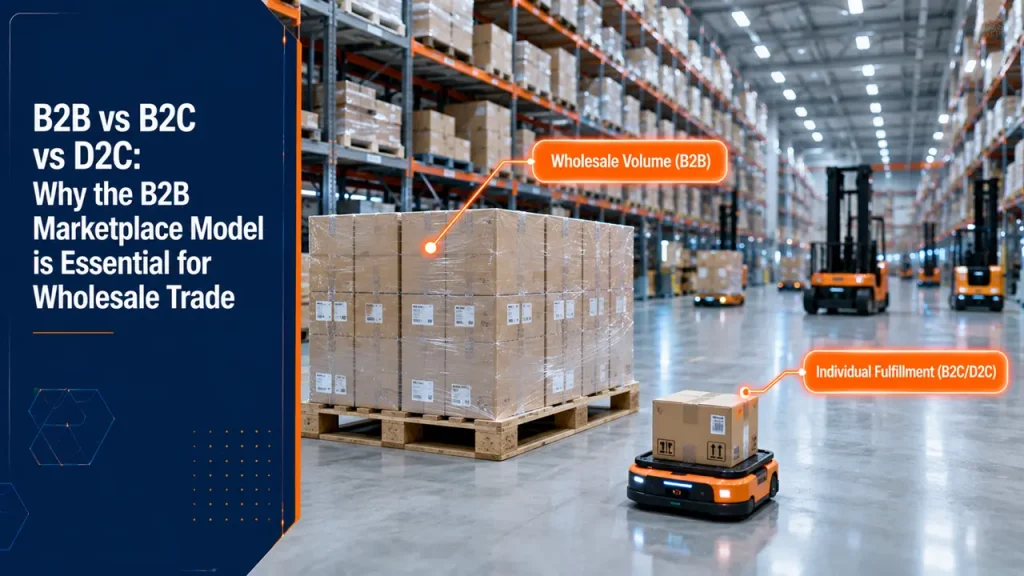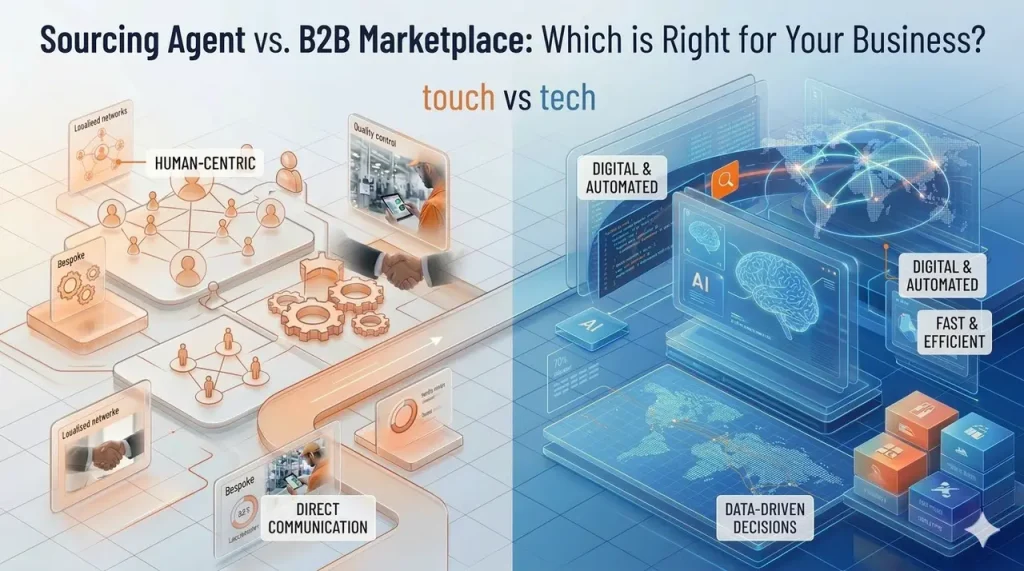

Three core manufacturing models – ODM, OEM, and Contract Manufacturing – define how a product moves from concept to market. Each model offers a different balance of design ownership, capital requirements, and operational control. Selecting the right approach is a strategic decision that directly affects product quality, cost structure, IP protection, and time-to-market.
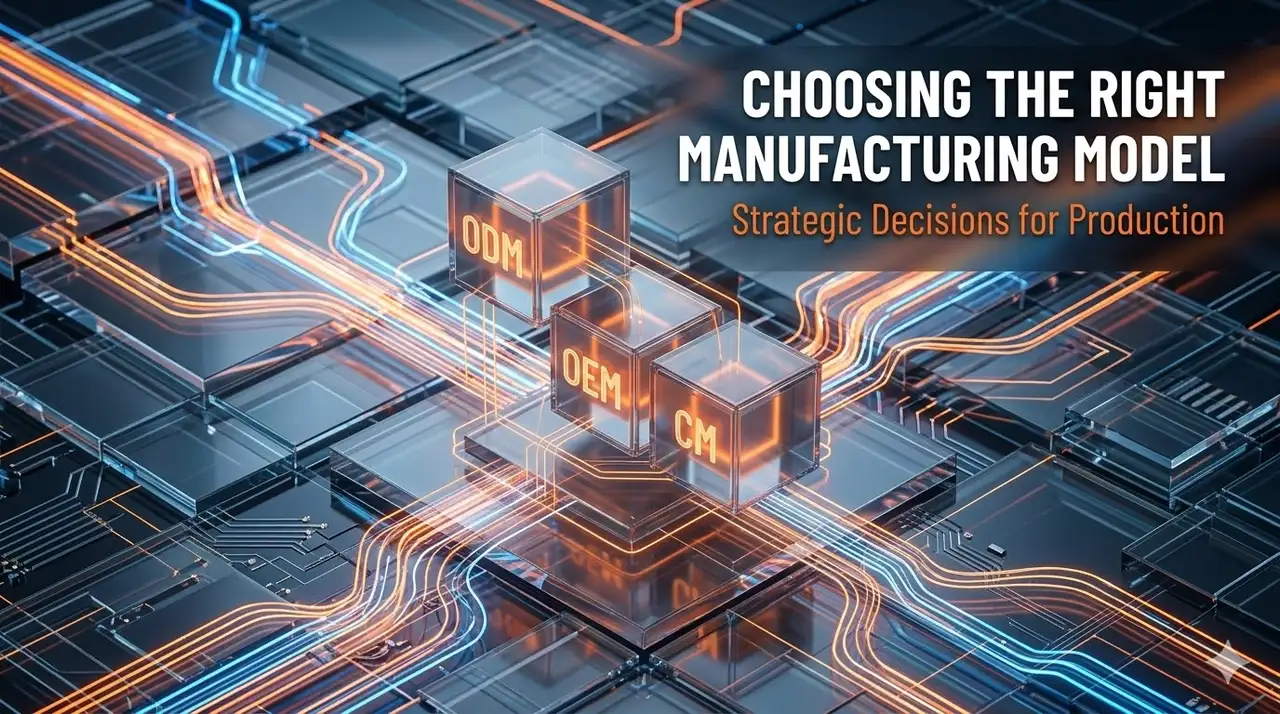
This guide explains the differences between ODM, OEM, and CM. It shows the key strengths and limits of each model. It also gives you a simple decision path so you can choose the option that fits your capabilities and long-term goals.
Contents
Original Design Manufacturer (ODM)
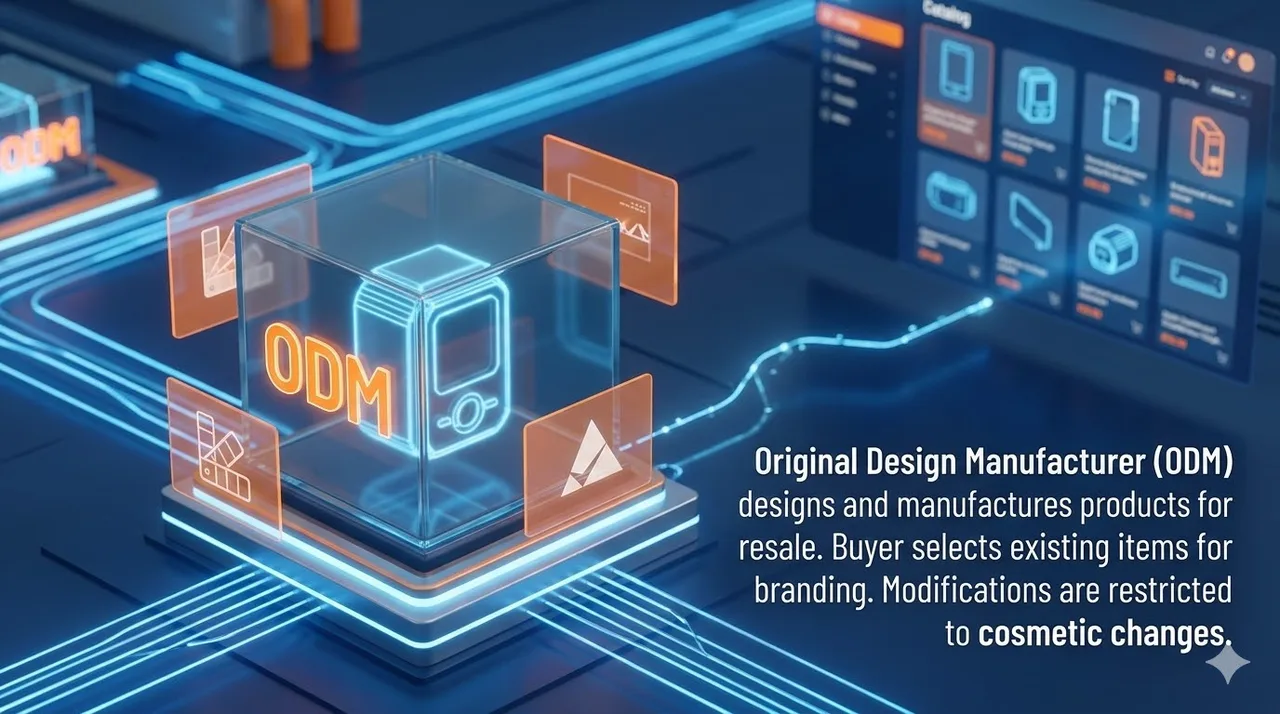
An Original Design Manufacturer (ODM) designs and manufactures products for resale by other companies. In this model, the manufacturer retains ownership of the product design and tooling. The buyer selects pre-existing items from a catalog and applies their branding. Modifications are typically restricted to cosmetic changes, such as color adjustments or logo placement.
Strategic Rationale
This model, often termed ‘Private Label’ or ‘White Label’, minimizes market entry barriers for retailers and e-commerce sellers. Buyers leverage the manufacturer’s established design expertise and economies of scale. Consequently, companies can concentrate resources on marketing and distribution rather than investing in Research and Development (R&D).
Market Context and Examples
China remains a dominant global hub for ODM manufacturing. Major sourcing events, such as the Canton Fair and Global Sources, serve as primary platforms for factories to display ready-made designs. Industries heavily utilizing the ODM model include: kitchen appliances, consumer electronics, LED lighting.
- Smartphone Industry: Samsung Electronics strategically shifted a significant portion of its low-to-mid-range smartphone production (specifically the Galaxy A and M series) to Chinese ODMs like Wingtech Technology and Huaqin Telecom Technology. In this arrangement, the ODMs design and manufacture the handsets, allowing Samsung to reduce production costs and compete with budget brands in emerging markets.
- Laptop Computers: Compal Electronics and Quanta Computer are the world’s largest notebook manufacturers. They develop reference designs (white-label laptops) that brands like HP, Dell, and Lenovo select and customize. While high-end models are often OEM (client-designed), many entry-level consumer laptops are based on the ODM’s existing chassis and motherboard platforms to speed up time-to-market.
- Home Appliances: Galanz Group is a dominant ODM in the microwave oven market, historically producing over 50% of the world’s microwaves. Many global appliance brands, including Whirlpool (in specific regions) and various retailer private labels, have sourced finished microwaves from Galanz. The clients leverage Galanz’s existing product lines rather than engineering their own magnetron technologies from scratch.
Original Equipment Manufacturer (OEM)
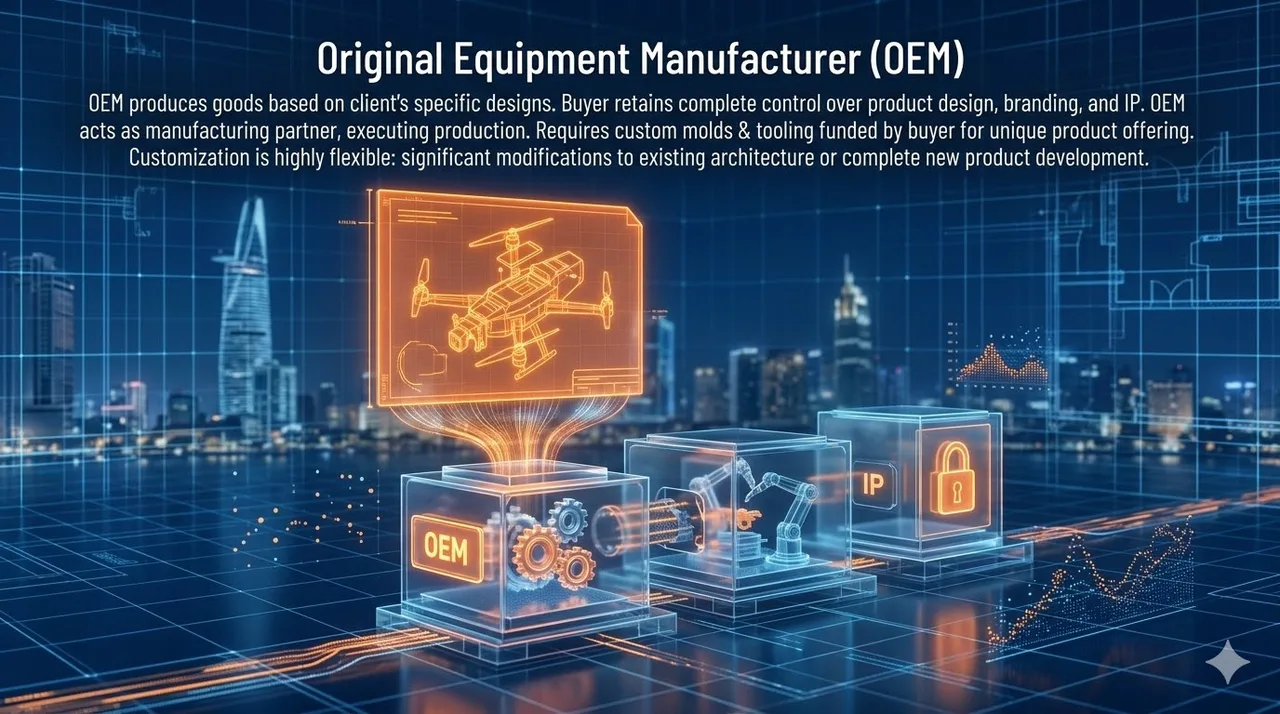
An Original Equipment Manufacturer (OEM) produces goods based on the specific designs and technical specifications provided by a client. In this model, the buyer retains complete control over product design, branding, and intellectual property (IP). The OEM acts strictly as the manufacturing partner, executing the production process using established supply chains and facilities.
Strategic Rationale
OEM projects typically require the creation of custom molds and specialized tooling. The buyer funds these upfront costs to secure a unique product offering. Customization levels in this model are flexible, generally categorized as:
- Significant modifications to a factory’s existing product architecture.
- Complete product development from scratch based on new engineering designs.
Market Context and Examples
The OEM model applies to both finished consumer goods and specific components within complex systems. Common examples include:
- Footwear Manufacturing: Nike designs its footwear internally but relies on partners like Yue Yuen Industrial for mass production. Nike provides detailed “tech packs” specifying materials and dimensions, leveraging the factory’s tooling capabilities. Yue Yuen’s Annual Reports consistently identify Nike and Adidas as major clients, confirming its role as the world’s largest footwear manufacturer for these brands.
- Semiconductors: NVIDIA operates as a “fabless” company, designing complex Graphics Processing Units (GPUs) while outsourcing the physical manufacturing to TSMC (Taiwan Semiconductor Manufacturing Company). NVIDIA’s SEC 10-K Filings explicitly list TSMC as their primary foundry partner responsible for manufacturing wafers to NVIDIA’s architectural designs.
- Bicycle Industry: Giant Manufacturing Co. serves as a major OEM for international brands such as Trek and Scott. While these clients engineer frame geometry, they contract Giant to produce the physical frames. Giant’s Corporate Profile documents their dual business model: producing their own branded bicycles (“Giant” brand) alongside OEM production for other major cycling companies.
Contract Manufacturer (CM)
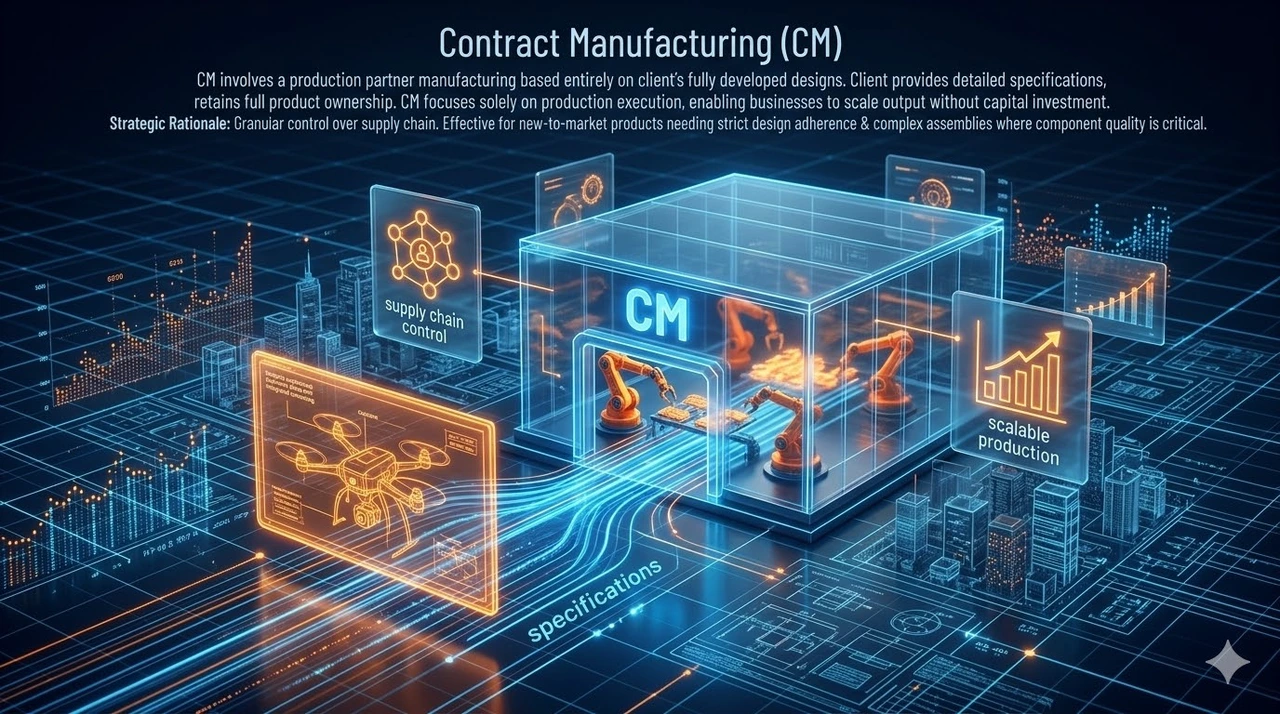
Contract Manufacturing (CM) involves a production partner manufacturing a product based entirely on the client’s fully developed designs. The division of labor is distinct: the client provides detailed specifications and retains full product ownership, while the CM focuses solely on production execution. This model enables businesses to scale output without capital investment in private manufacturing facilities.
Strategic Rationale
The CM model allows for granular control over the supply chain. Clients often dictate the sourcing of materials or provide specific components directly to the manufacturer for final assembly (consignment). This approach is particularly effective for:
- New-to-market products require strict adherence to design specs.
- Complex assemblies where specific component quality is critical.
Market Context and Examples
The buyer retains full Intellectual Property (IP) rights since they generate all design and engineering files. However, ownership must still be enforced through legal contracts and patents.
- Consumer Electronics: The Apple-Foxconn partnership is the standard example. Apple manages the design, engineering, and supply chain strategy, while Foxconn provides the labor and infrastructure for mass production.
- Automotive Industry: Magna Steyr acts as a contract manufacturer for major automakers. They assemble complete vehicles, such as the Mercedes-Benz G-Class and the Jaguar I-PACE, strictly adhering to the design and engineering specifications provided by the respective brands.
- Networking Hardware: Cisco Systems operates a “fabless” manufacturing model. The company focuses on designing networking equipment and software, while outsourcing physical production to CM partners like Jabil and Flex.
Comparative Overview: ODM, OEM, and CM
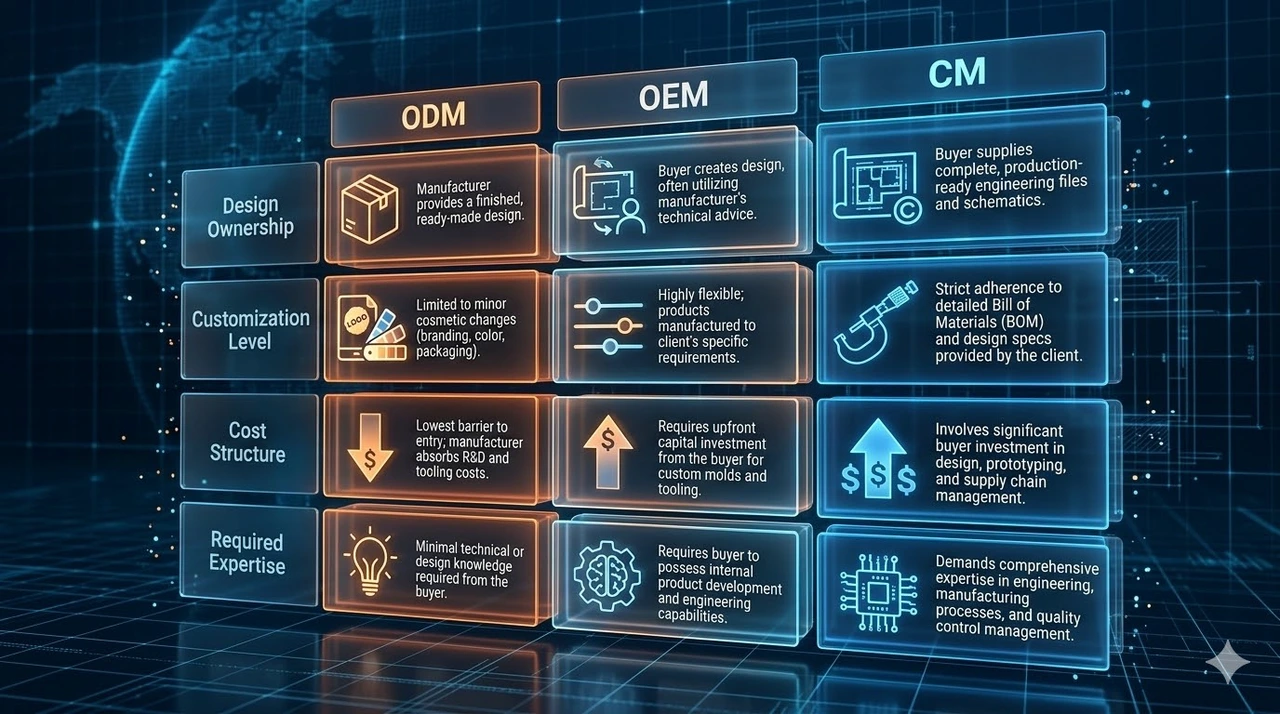
Analyzing the strategic trade-offs involving control, cost, speed, and intellectual property is essential for selecting the appropriate manufacturing partner. The following breakdown differentiates the key operational factors of each model.
Intellectual Property (IP) Ownership
IP ownership is a key difference between ODM, OEM, and CM. It has direct impact on long-term competitiveness and margin structure.
- ODM (Manufacturer-Owned): The manufacturer retains ownership of the core product design, engineering, and tooling. The buyer owns only the trademarks associated with their branding. Consequently, buyers cannot patent the product and face competition from other companies sourcing the identical base unit.
- OEM (Split Ownership): IP rights are shared. The buyer owns the specific design elements and custom tooling they funded. However, the manufacturer typically retains rights to the underlying architecture or standard components. This model offers stronger protection than ODM but requires precise contractual definitions of ownership boundaries.
- CM (Buyer-Owned): The buyer possesses full rights to the intellectual property, as they supply the complete design and engineering files. However, ownership is not automatic. Buyers must actively secure patents and trademarks to establish legal grounds for protection.
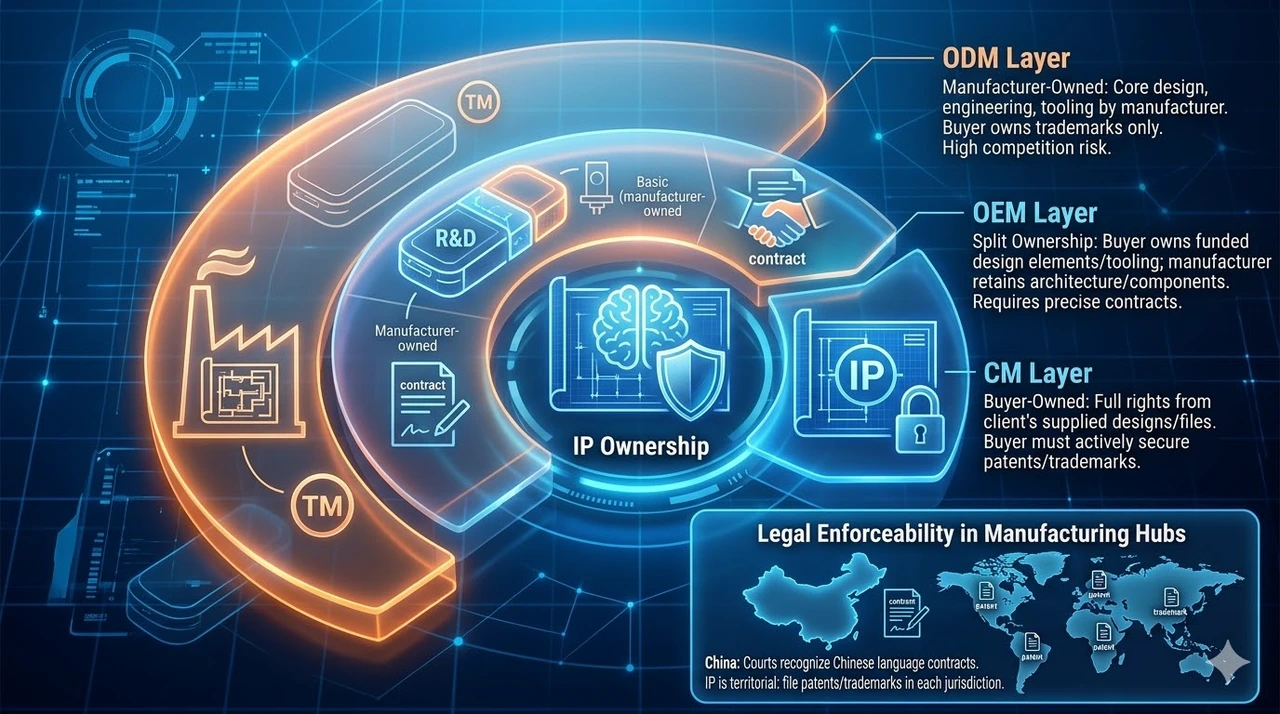
Legal Enforceability in Manufacturing Hubs: For production based in China, courts generally recognize only contracts written in the Chinese language. Furthermore, IP protection is territorial. Companies must file for trademarks and patents in every specific jurisdiction where the product is sold to effectively combat infringement.
Product Development & Timelines
Time-to-market significantly impacts a company’s ability to capitalize on market trends. The development lifecycle and documentation responsibilities vary distinctly across the three models.
| ODM (1 to 4 Weeks) | OEM (1 to 6 Months) | CM (3 to 12+ Months) | |
| Timeline | Offers the fastest route to production by leveraging pre-existing designs and tooling. | The schedule includes phases for design collaboration, prototyping, and the fabrication of custom molds. | Requires the longest lead time as supply chains, component sourcing, and manufacturing processes must be established from the ground up. |
| Responsibility | The manufacturer generates the Product Specification Sheet. This allows buyers to bypass the prototyping phase and enter the market immediately. | The buyer creates the Product Specification Sheet, typically with technical guidance and validation from the manufacturer. | The buyer bears full responsibility for creating the Product Specification Sheet and all detailed technical documentation without manufacturer input on design. |
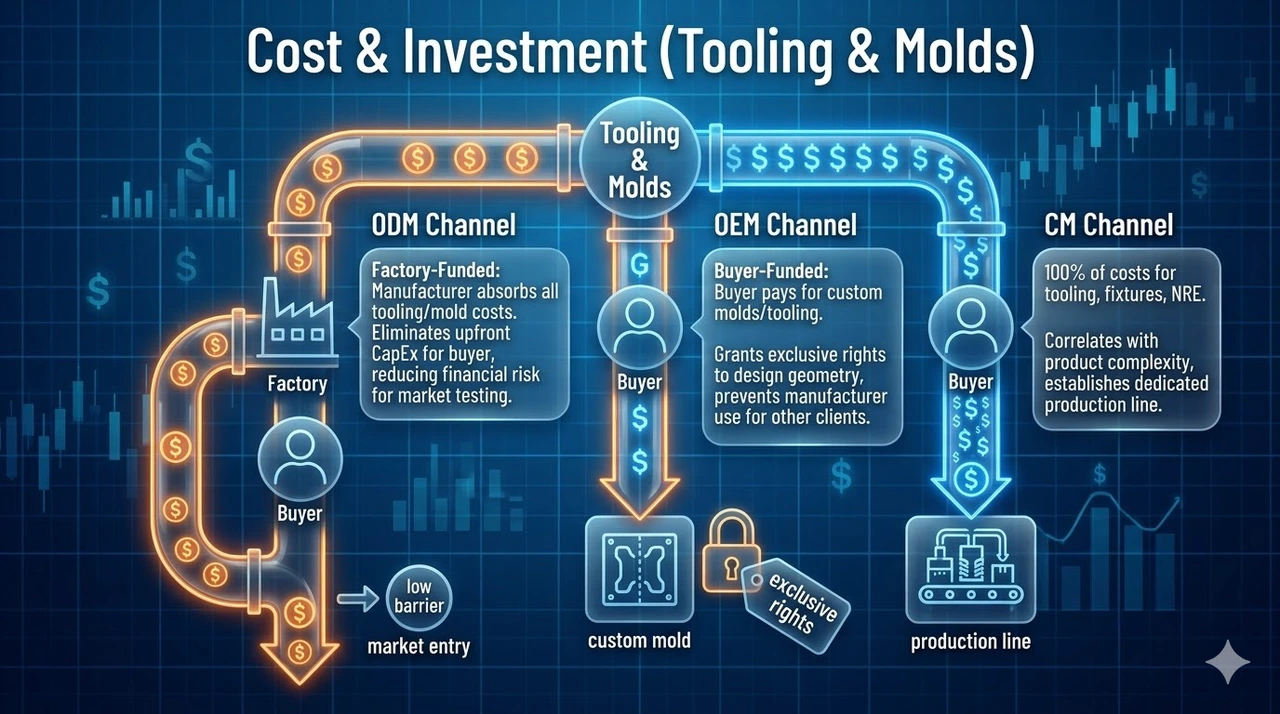
Cost & Investment (Tooling & Molds)
The ownership of tooling defines the initial Capital Expenditure (CapEx) required for market entry.
- ODM (Factory-Funded): The manufacturer absorbs all costs related to molds and tooling. This eliminates upfront CapEx for the buyer, lowering the barrier to entry and reducing financial risk for market testing.
- OEM (Buyer-Funded): The buyer pays for all custom molds and tooling. This investment grants the buyer exclusive rights to the specific design geometry and prevents the manufacturer from using these molds for other clients.
- CM (Buyer-Funded): The buyer bears 100% of the costs for tooling, fixtures, and Non-Recurring Engineering (NRE). These expenses correlate directly with product complexity and are necessary to establish a dedicated production line.
Advantages and Disadvantages of Each Model
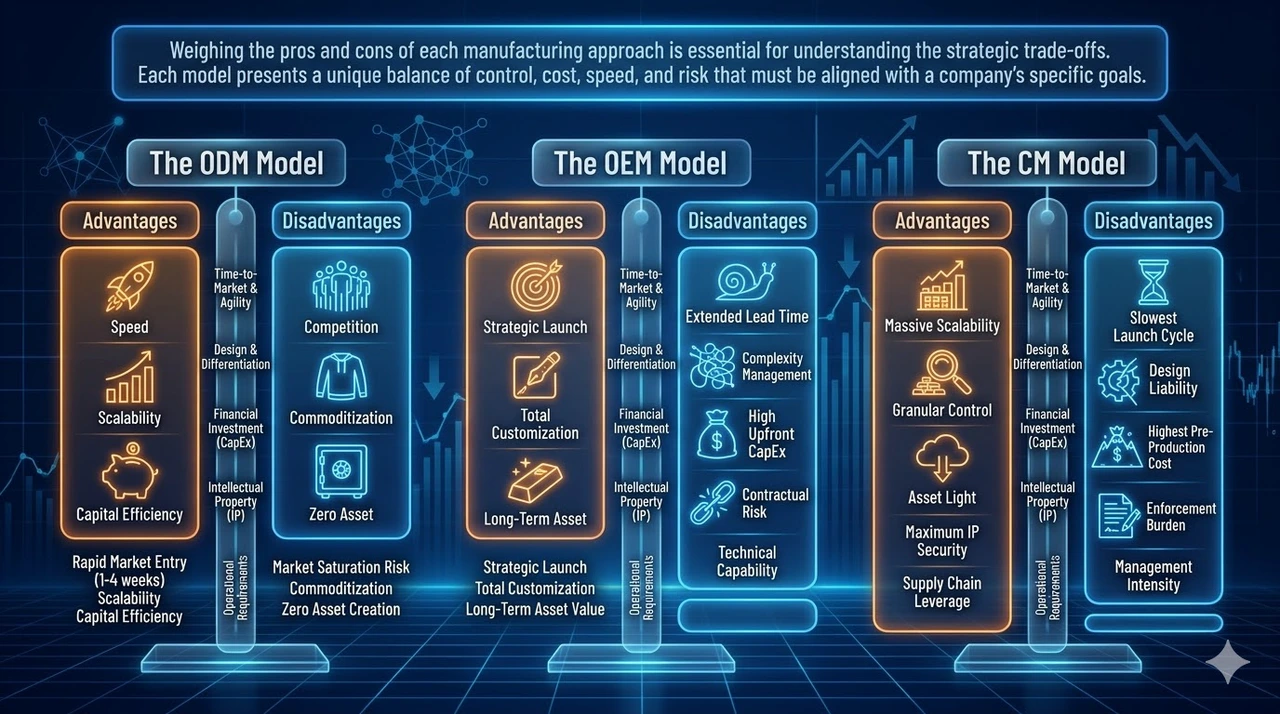
Weighing the pros and cons of each manufacturing approach is essential for understanding the strategic trade-offs. Each model presents a unique balance of control, cost, speed, and risk that must be aligned with a company’s specific goals.
The ODM Model
Prioritizes speed and cost-efficiency over control and uniqueness.
| Key factor | Advantages | Disadvantages |
| Time-to-Market & Agility | Rapid Market Entry: Leveraging existing designs enables accelerated launch cycles (typically 1-4 weeks), allowing immediate capitalization on trends. | Market Saturation Risk: Competitors can launch identical products simultaneously, leading to potential “race to the bottom” pricing. |
| Design & Differentiation | Scalability: Factories can quickly scale production volume for proven “off-the-shelf” products to meet demand spikes. | Commoditization: Modifications are limited to cosmetics. The lack of unique features makes product differentiation and brand defense extremely difficult. |
| Financial Investment (CapEx) | Capital Efficiency: The manufacturer absorbs tooling and R&D costs, eliminating upfront CapEx and lowering the barrier to entry. | Zero Asset Creation: Expenditures are treated as operating costs rather than investments. The buyer builds no tangible asset value in molds or tooling. |
| Intellectual Property (IP) | Simplified Legalities: No need to manage complex patent filings or design registrations for the core product. | Competitive Vulnerability: The manufacturer retains core design IP. Buyers cannot patent the product or prevent competitors from selling the exact same unit. |
| Operational Requirements | Resource Focus: Outsourcing technical development allows the buyer to concentrate entirely on marketing, sales, and customer service. | Supply Chain Opacity: Buyers lack visibility into the Bill of Materials (BOM) and production processes, creating risks of inconsistent quality or component swapping. |
The OEM Model
Prioritizes brand identity and asset ownership over speed and low cost.
| Key factor | Advantages | Disadvantages |
| Time-to-Market & Agility | Strategic Launch: Product launches are timed around unique value propositions rather than just speed. | Extended Lead Time: Development cycles are significantly longer (1-6 months) due to required phases for prototyping, tooling fabrication, and testing. |
| Design & Differentiation | Total Customization: Full control over specifications ensures the final product aligns perfectly with brand identity and market positioning. | Complexity Management: Any design flaw or functionality issue is the buyer’s responsibility to resolve, potentially delaying the project. |
| Financial Investment (CapEx) | Long-Term Asset Value: Investment in custom tooling prevents competitors from using the same equipment, creating a barrier to entry. | High Upfront CapEx: Requires substantial initial capital for R&D, custom molds, and engineering fees before a single unit is produced. |
| Intellectual Property (IP) | Proprietary Protection: Buyers own specific design rights and tooling, providing a stronger legal basis to sue infringers. | Contractual Risk: IP ownership is often split (Brand owns design, Factory may own process). Without robust contracts, risks of reverse engineering exist. |
| Operational Requirements | Specialized Quality: Access to the manufacturer’s specialized supply chain ensures high standards for custom components. | Technical Capability: Demands high buyer expertise to provide detailed engineering files (CAD/Gerber) and strictly manage technical quality standards. |
The CM Model
Prioritizes total control, scalability, and IP security over speed and upfront cost efficiency.
| Key factor | Advantages | Disadvantages |
| Time-to-Market & Agility | Massive Scalability: Facilities are built for high volume. Once established, production output can be scaled rapidly and consistently to support global growth. | Slowest Launch Cycle: Lead times are the longest (3-12+ months). Production lines, supply chains, and processes must be developed from the ground up (NPI). |
| Design & Differentiation | Granular Control: Total transparency into the Bill of Materials (BOM) allows the buyer to dictate specific component sources and quality standards for maximum differentiation. | Design Liability: The buyer bears 100% responsibility for product functionality. The CM guarantees assembly quality, but design failures are the buyer’s burden. |
| Financial Investment (CapEx) | Asset Light: Eliminates the immense capital requirement for building, staffing, and maintaining proprietary manufacturing facilities (Factory Overhead). | Highest Pre-Production Cost: Requires heavy investment in R&D, prototyping, testing, and Non-Recurring Engineering (NRE) fees before production begins. |
| Intellectual Property (IP) | Maximum Security: IP ownership is clear and absolute. Since the buyer generates all engineering files, the risk of disputes or ownership ambiguity is minimized. | Enforcement Burden: Ownership is not automatic. The buyer bears the sole responsibility and cost for securing patents, trademarks, and enforcing contracts globally. |
| Operational Requirements | Supply Chain Leverage: Access to the CM’s established global vendor network often results in better material pricing and component availability. | Management Intensity: Success depends entirely on preparation. Requires finalized designs, rigorous documentation (SOPs), and constant technical communication. |
Strategic Selection: Which Model is Right for You?
Selecting the optimal manufacturing model requires assessing organizational resources, market positioning, and financial constraints. The following framework aligns business objectives with the appropriate production strategy.
| Selection Criteria | ODM (Speed & Efficiency) | OEM (Customization & Brand) | CM (Scalability & IP Security) |
| Primary Strategic Goal | Rapid Market Entry: Prioritizes speed and cost-efficiency to test market viability or capitalize on trends. | Product Differentiation: Focuses on creating a unique, branded product to establish a defensible market position. | Control & Scale: Prioritizes absolute IP protection, strict quality adherence, and mass-production scalability. |
| Ideal Candidate Profile | Market Entrants: First-time buyers, e-commerce sellers (e.g., Amazon FBA), or brands with limited R&D capabilities. | Design-Led Brands: Companies with strong product concepts and funding but lacking internal manufacturing infrastructure. | Mature Enterprises: Tech firms or established brands with fully validated engineering designs and high-volume requirements. |
| Required Resources | Minimal: Requires budget primarily for inventory and marketing. No engineering team needed. | Moderate: Requires capital for custom tooling (molds) and an internal team to manage design specifications. | Significant: Demands finalized engineering files (BOM/Gerber), legal teams for IP enforcement, and budget for NRE costs. |
| Key Advantages | Low Barrier to Entry: Eliminates upfront R&D and tooling costs, allowing for smaller Initial Order Quantities (MOQs). | Proprietary Assets: Creates tangible assets (molds) and unique features that competitors cannot easily replicate. | Infrastructure Leverage: Utilizes world-class manufacturing facilities without the overhead of building and staffing a private factory. |
| Best Use When… | The product is a standard commodity, and competitive advantage is driven by marketing or price. | The product requires specific functionality or aesthetics to distinguish the brand from competitors. | The product involves sensitive IP, complex assembly, or requires a dedicated production line for global distribution. |
Practical Considerations in Manufacturing
Successful manufacturing partnerships require strategic sourcing and rigorous quality management. Operational protocols must align with the chosen production model to mitigate risk.
Sourcing Strategy & Regional Strengths
This matrix outlines the strategic advantages of key manufacturing regions and digital platforms based on the production model.
| Sourcing Channel | Primary Strength | Ideal Production Model | Key Considerations |
| China | Integrated Ecosystem: Unmatched supply chain depth for components, rapid tooling, and vast “off-the-shelf” catalogs. | ODM & OEM | The definitive hub for rapid electronics and consumer goods. Diversification is necessary only for tariff mitigation or supply chain resilience. |
| Vietnam/India | Cost & Compliance: Lower labor costs and alternative trade agreements. Strong in assembly and specific industries (Textiles, Pharma). | OEM & CM | Developing supply chains may require importing raw materials. Best suited for custom manufacturing (OEM/CM) rather than sourcing ready-made (ODM) designs. |
| Global Sources | Verified Quality: Emphasizes export-ready suppliers and strictly vetted manufacturers. | OEM & CM | Smaller database than Alibaba but higher reliability for professional buyers seeking long-term partners. |
| Alibaba | Volume & Variety: The world’s largest supplier database covering every product category. | ODM & Private Label | Essential for broad market research. Requires rigorous due diligence to distinguish between trading companies and actual factories. |
Quality Assurance & Compliance Framework
Certifications act as objective benchmarks for verifying a manufacturer’s capability and commitment to standards.
| Category | Standard/Certification | Operational Significance |
| General Management | ISO 9001:2015 | Baseline Requirement: Verifies that the factory has a consistent Quality Management System (QMS) to minimize defects and ensure repeatability. |
| Industry Specific | IATF 16949 (Auto)
ISO 13485 (Medical) AS9100 (Aerospace) |
Critical Compliance: Mandatory for regulated industries. Demonstrates the facility’s ability to meet stringent safety and precision requirements. |
| Environmental & Safety | RoHS / REACH CE / FCC / UL |
Market Access: Confirms products contain no hazardous materials and meet the safety standards required for import into the EU and US markets. |
| Social Responsibility | SA8000 / BSCI | Ethical Sourcing: Validates fair labor practices and safe working conditions, crucial for protecting brand reputation in global markets. |
Conclusion
Selecting the appropriate manufacturing model is a strategic decision dictated by capital resources, time-to-market constraints, and intellectual property requirements.
- OEM (Customization Focus): Produces unique goods based on the buyer’s design. This model balances customization with investment, offering strong brand differentiation but requiring upfront capital for tooling and development time.
- ODM (Speed Focus): Enables rapid market entry by rebranding existing factory designs. This path offers the highest capital efficiency and speed but sacrifices design control and intellectual property ownership.
- CM (Control & Scale Focus): Executes mass production based on the buyer’s fully developed engineering files. This model is essential for mature products requiring scalability, strict quality control, and absolute IP security.
Strategic Alignment
The final decision must align with the company’s core objectives:
- Speed vs. Uniqueness: Choose ODM for speed; choose OEM/CM for differentiation.
- Capital Availability: ODM minimizes upfront costs; OEM/CM requires R&D and tooling investment.
- Risk Tolerance: ODM carries IP risks; CM offers the highest legal protection for proprietary designs.