




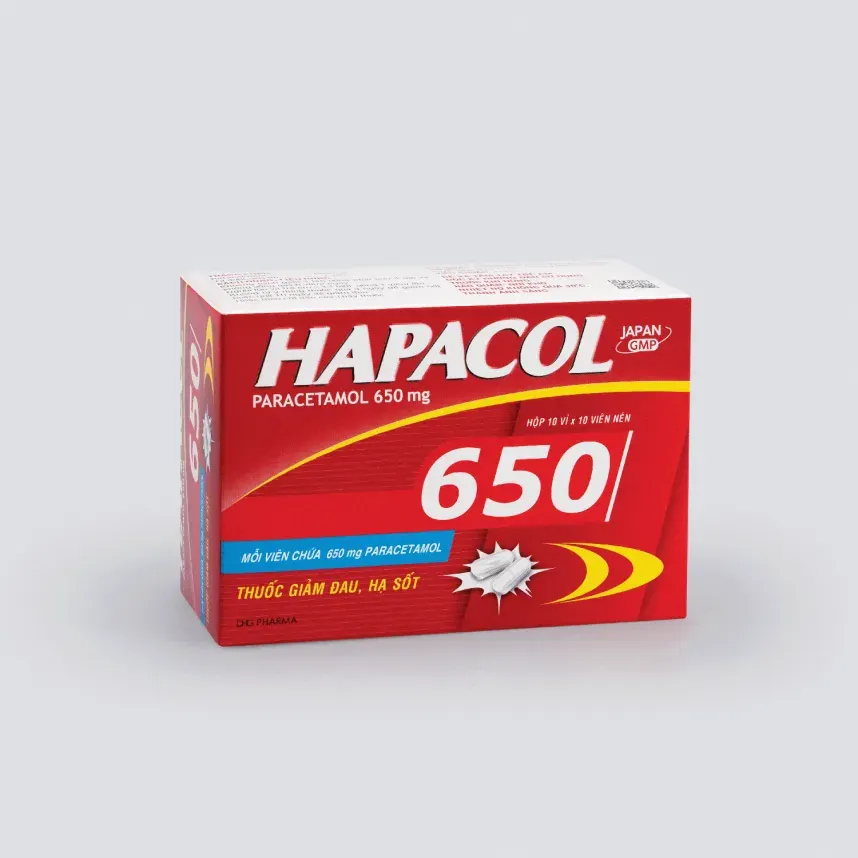
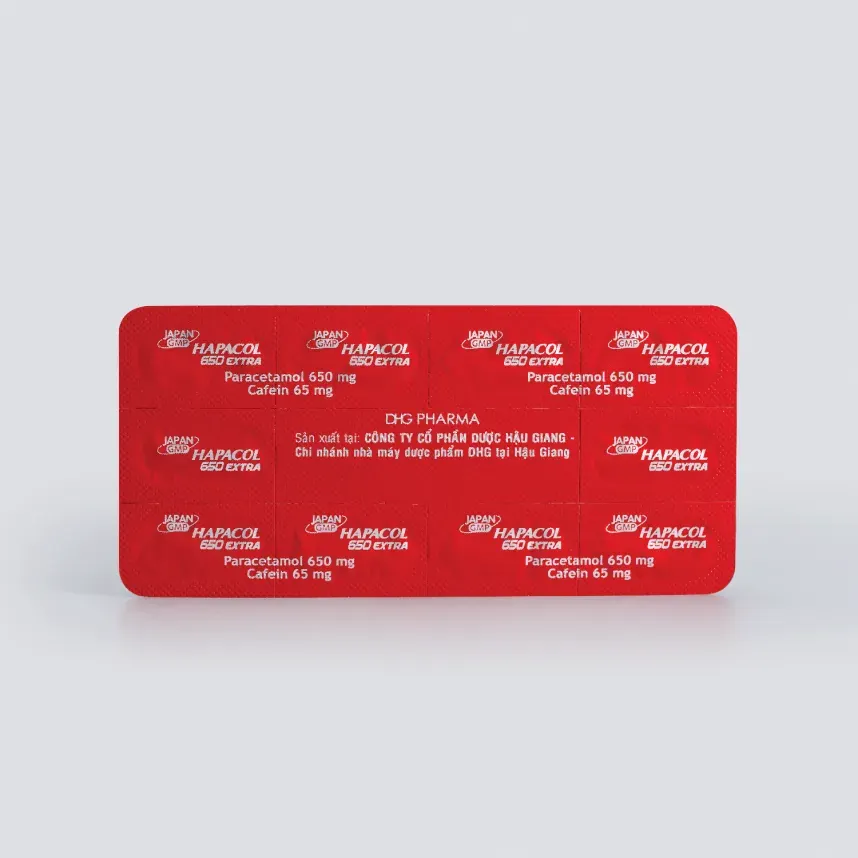
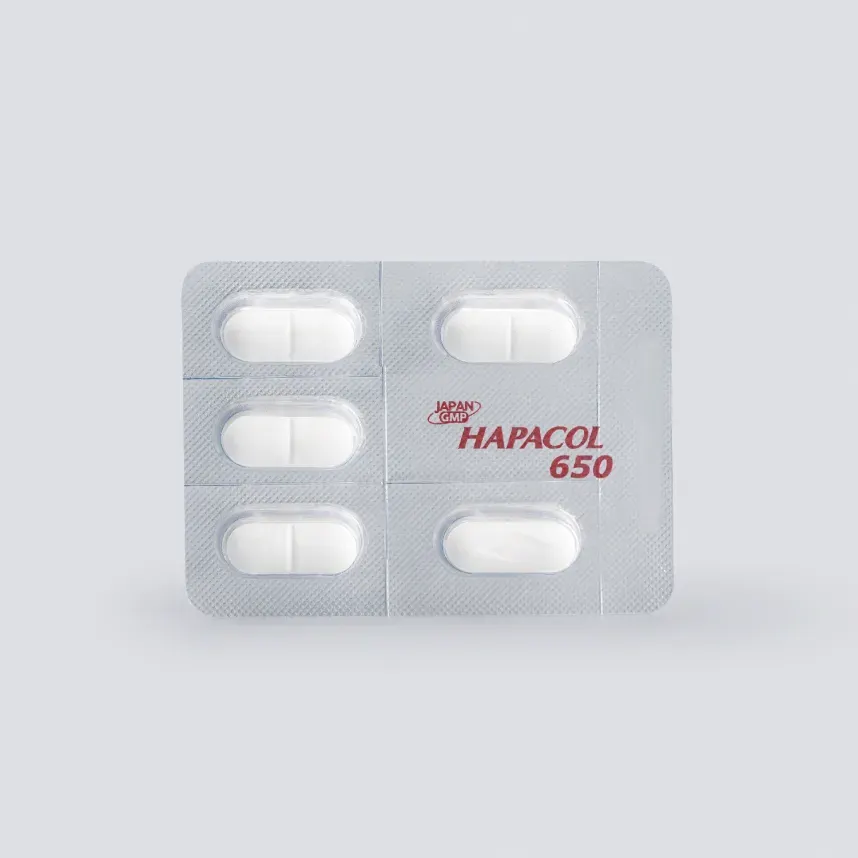
Hapacol 650


(0 Ratings)
Share



Brand
DHG Pharma
Grade / Type / Style
Hapacol 650 - Box of 50 tablets
Receive processing
No
Minimum Order Quantity (MOQ)
100 box
Provide samples
No
Product Condition
100% New
Main Export Market
Vietnam, China
Packaging
Packaging type
box
Packaging Detail
Standard
B2B Sales Policy
Agreement
Agreement
Agreement
Agreement
Detailed description
Unit
Box
Formula
Active ingredient:
Paracetamol ............ 650 mg
Excipients: qs ……1 tabletDosage form
Tablet.
Pharmacodynamics
ATC code: N02B E01
Paracetamol is an effective analgesic and antipyretic. The drug acts on the thermoregulatory center in the hypothalamus, causing a decrease in body temperature by increasing heat dissipation due to vasodilation and increased peripheral blood flow, reducing body temperature in people with fever, but rarely reducing normal body temperature. Paracetamol reduces pain by raising the pain threshold.
At therapeutic doses, the analgesic and antipyretic effects are equivalent to Aspirin, but Paracetamol has less effect on the cardiovascular and respiratory systems, does not alter acid-base balance, and does not cause irritation, scratches, or bleeding in the stomach.Pharmacokinetics
Paracetamol is rapidly and almost completely absorbed through the gastrointestinal tract. The elimination half-life is 1.25 - 3 hours. The drug is metabolized in the liver and excreted through the kidneys.
Driving and operating machinery
The drug does not affect the ability to drive and operate machinery.
Pregnant women and breastfeeding
The safety of Paracetamol for the fetus when used in pregnant women has not been determined. Therefore, the drug should only be used in pregnant women when absolutely necessary. Studies in breastfeeding mothers using Paracetamol have not shown any undesirable effects in breastfed infants.
Undesirable effects
Rare: skin rash; nausea, vomiting; kidney disease, kidney toxicity with prolonged abuse; neutropenia, pancytopenia, anemia.
Rare: hypersensitivity reactions.
Report any undesirable effects encountered when using the drug to your doctor.Overdose and management
Paracetamol overdose due to a single toxic dose or repeated large doses of Paracetamol (7.5 - 10 g per day, for 1 - 2 days) or long-term use of the drug. Dose-dependent liver necrosis is the most serious acute toxic effect of overdose and can be fatal.
Symptoms of Paracetamol overdose: nausea, vomiting, abdominal pain, cyanosis of the skin, mucous membranes and nails.
Symptoms of severe Paracetamol poisoning: initially mild stimulation, agitation and delirium. This is followed by central nervous system depression: stupor, hypothermia, fatigue, rapid and shallow breathing; rapid, weak, irregular pulse, low blood pressure and circulatory failure.
Management: Early diagnosis is crucial in the treatment of Paracetamol overdose.
In cases of severe Paracetamol poisoning, intensive supportive treatment is required. Gastric lavage should be performed in all cases, preferably within 4 hours of ingestion.
The main antidote is the use of Sulfhydryl compounds. N-acetylcysteine is effective when taken orally or intravenously.
In addition, Methionine, activated charcoal and/or saline purgatives can be used.Storage conditions
Dry place, temperature not exceeding 30°C, avoid light.
Expiry date
36 months from the date of manufacture.
Warnings and precautions for use
For people with phenylketonuria and those who need to restrict the amount of phenylalanine in their body, avoid using Paracetamol with drugs or foods containing Aspartame.
For some hypersensitive people (asthma), avoid using Paracetamol with drugs or foods containing sulfites.
Use with caution in patients with pre-existing anemia, impaired liver and kidney function.
Drinking a lot of alcohol can increase the hepatotoxicity of Paracetamol, so avoid or limit alcohol consumption.
Doctors should warn patients about the signs of serious skin reactions such as Stevens-Johnson syndrome (SJS), toxic epidermal necrolysis (TEN) or Lyell's syndrome, acute generalized exanthematous pustulosis (AGEP).Drug interactions and incompatibilities
Long-term high-dose Paracetamol slightly increases the anticoagulant effect of Coumarin and Indandione derivatives.
Attention should be paid to the possibility of severe hypothermia in patients using Phenothiazine and antipyretic therapy.
Anticonvulsants (Phenytoin, Barbiturate, Carbamazepine), Isoniazid and anti-tuberculosis drugs can increase the hepatotoxicity of Paracetamol.
Excessive and prolonged alcohol consumption can increase the risk of Paracetamol causing liver damage.


Can't find the product you're looking for??
Share your needs with suppliers and receive direct quotes using Arobid RFQ!
